
Surplus construction machines formerly assigned to defense engineering units are often decommissioned and redistributed for civilian infrastructure tasks. These assets typically include tracked and wheeled earthmoving units, modular bridging systems, lifting gear, and self-contained power or support trailers. In civil projects they can serve roles such as site preparation, temporary access, emergency bridging, or mobile power support after assessment and any needed adaptation to non-military standards.
Such equipment commonly varies in age, configuration, and maintenance history. Sourcing may involve public auction platforms, government disposals, specialized brokers, or contractor exchanges. Condition, documentation, and possible configuration differences from commercial equivalents often determine whether a unit is suited to a specific public works or private construction assignment.
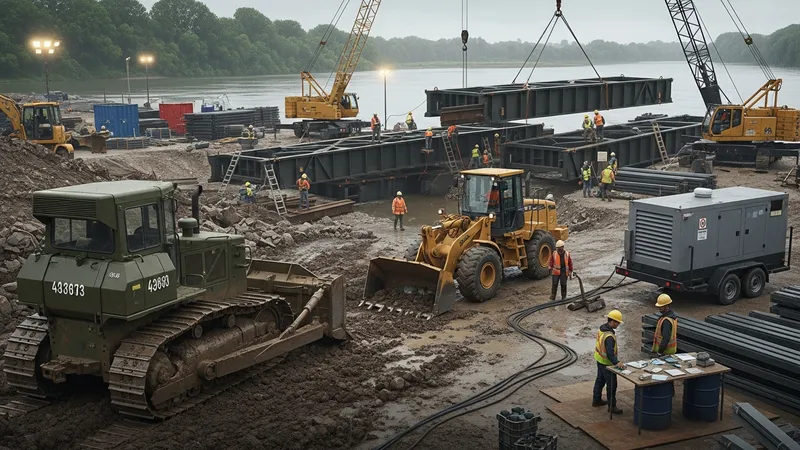
When evaluating these categories, purchasers and project planners often examine service records, refurbishment history, and compatibility with civil project requirements. Mechanical systems may follow military maintenance cycles that differ from commercial schedules, so condition assessment should include engine hours, hydraulic integrity, and wear on travel systems. Structural components such as frames and booms may have been reinforced for military use and can often be inspected for stress concentrations, corrosion, or aftermarket modifications before integration into a civil workflow.
Parts availability can influence lifecycle considerations. Some surplus models may share components with commercial counterparts and thus have accessible supply chains; others may use legacy or specialized parts that require remanufacture or substitution. Maintenance teams typically evaluate whether routine repair can be supported in-house, by third-party shops, or through parts networks. Where original parts are scarce, retrofitting with compatible commercial subsystems sometimes offers a pragmatic path to restore serviceability.
Regulatory and environmental checks often affect suitability for civil deployment. Emissions, noise, and fuel-handling systems may need evaluation against local environmental rules. Surface contamination, prior use with atypical lubricants, or residues can necessitate decontamination or material testing. Where bridge or lifting assemblies are repurposed, structural certification or load testing may be required to confirm compliance with civil engineering standards and public safety expectations.
Logistics for moving large surplus units typically influence project scheduling and cost estimates. Transport permits, route assessments, and specialized trailers may be needed for oversized loads. Site access and ground-bearing capacity are practical constraints for heavy tracked machines. Planners often weigh the time and expense of repositioning surplus equipment versus leasing or acquiring equivalents designed for civilian road transport and workplace interfaces.
In summary, redirected military engineering gear can provide functional hardware for civil construction when matched to project needs, inspected for condition, and adapted to applicable standards. Key considerations include mechanical condition, parts access, regulatory compliance, and logistical fit. The next sections examine practical components and considerations in more detail.
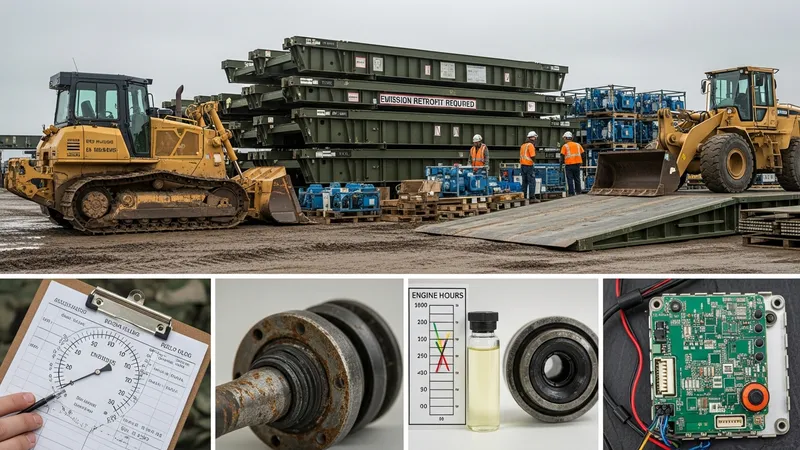
Understanding category-specific traits helps match a surplus unit to civil tasks. Tracked dozers often excel on unstable ground but may require adjustments for road transit; wheeled loaders can offer faster site mobility yet may have different load ratings than commercial equivalents. Modular bridging systems are engineered for rapid deployment and may be reused as temporary crossings, but they often need load verification and deck surfacing updates for public use. Power units and pumps are valued for self-contained capability but may need emission controls or fuel-system changes to meet workplace rules.
Typical condition indicators include engine hours, hydraulic fluid analysis, track or tire wear, and signs of structural fatigue. Military maintenance documentation can be uneven; where logs are present they may follow field-service conventions that differ from commercial shop records. Inspections often prioritize hydraulic seals, boom pins, undercarriage rollers, and electronic control modules. Corrosion assessment is relevant for units exposed to marine or chemical environments during prior service, as corrosion can reduce structural margins and affect safe operation.
Compatibility with civil attachments and ancillary equipment is another consideration. Forks, buckets, or hydraulic couplers used in military service may not conform to commercial quick-coupler standards, potentially requiring adapter fabrication. Electrical systems may use different voltages or connectors, affecting integration with site electrical networks. Planners may evaluate whether retrofitting to conventional attachment standards is economically and technically feasible based on project timelines and expected usage intensity.
Category-level lifecycle planning often weighs refurbishment costs against expected remaining service life. Some units may be cost-effective to restore for limited-duration work such as temporary access or emergency response, while others may be more appropriate as parts donors. Estimating remaining operational life typically involves combining mechanical inspection results with availability of replacement components and the anticipated intensity of civil project use. Such assessments can guide whether to invest in restoration or to source alternatives that better match civil work profiles.
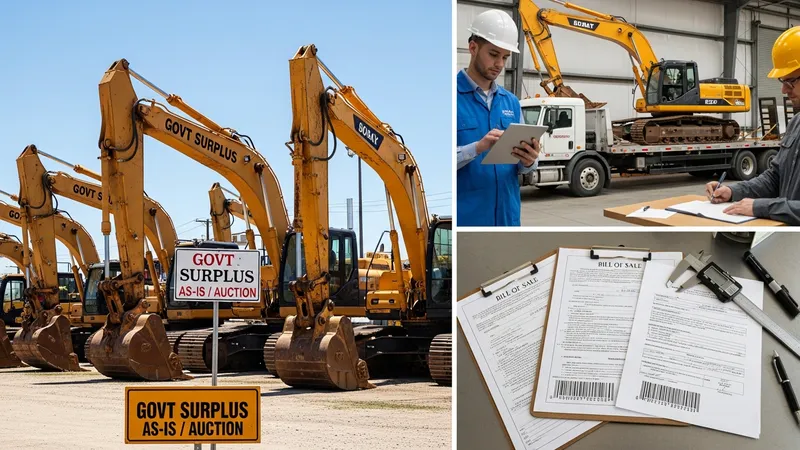
Acquisition pathways generally include public government disposals, online auction platforms, specialized surplus brokers, and direct transfers between agencies or contractors. Each channel may present different documentation norms, transfer conditions, and warranties—if any. Auctions often sell equipment “as-is” with limited disclosures, whereas brokered sales may include refurbished units or inspection reports. Evaluating channel-specific practices helps set expectations for the level of pre-sale information and for post-acquisition responsibilities such as registration or reclassification for civil use.
Documentation plays a central role in transfer suitability. Bills of sale, maintenance logs, decommissioning certificates, and prior inspection reports may be available to inform due diligence. Where documentation is sparse, buyers often arrange independent inspections or condition surveys before committing. Title or ownership transfer rules may differ by jurisdiction and equipment type; understanding local registration requirements and any export/import controls, where applicable, helps avoid compliance gaps when moving equipment between regions.
Cost considerations extend beyond the purchase price to include refurbishment, transport, and re-certification. Some surplus units are priced attractively but require substantial investment to address wear, obsolete components, or compliance upgrades. Brokers and refurbishment specialists may offer estimates for common repairs, but these should be treated as indicative. Project managers often build contingency allowances for unforeseen mechanical findings and for regulatory tests that can reveal additional work needed before the equipment is deployed on a public or private site.
Inspection strategies commonly combine visual checks, functional tests, and targeted diagnostics. Visual inspection can identify leaks, structural damage, or corrosion. Operational trials under load—when feasible—may reveal transmission issues, hydraulic deficiencies, or control faults. Fluid sampling and basic non-destructive testing can reveal internal degradation. When planning procurement, incorporating a structured inspection checklist and a conditional offer framework can help align expectations between seller and acquirer without implying warranty coverage.
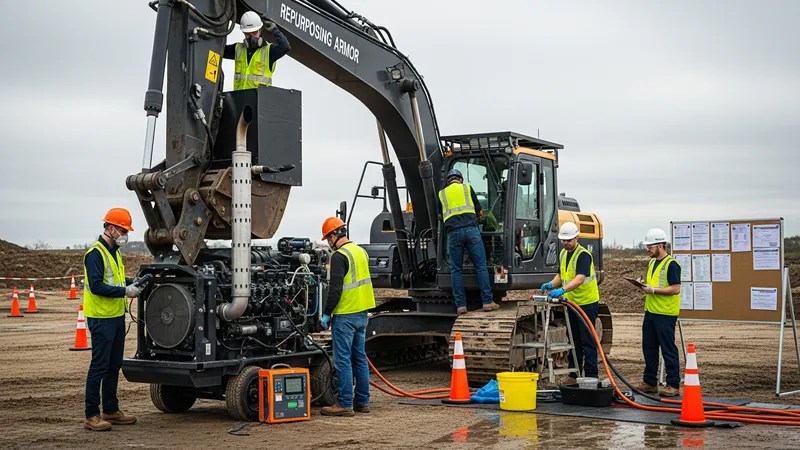
Adapting defense-origin machines to civilian regulatory frameworks often requires reviewing emissions standards, noise regulations, and workplace safety codes. Engines may need tuning, exhaust treatment, or replacement to meet local emissions thresholds. Noise attenuation measures can be added to reduce impact on nearby communities. Safety systems such as operator enclosures, lighting, and signaling may need upgrades to align with occupational safety norms applicable to construction sites in a given jurisdiction.
Environmental assessments may be relevant when equipment has operated in contaminated or chemically challenging environments. Decontamination protocols and material testing can confirm that hydraulic fluids, fuel residues, or other contaminants do not pose a site risk. Soil-contacting components may require cleaning or replacement prior to use on sensitive sites. Permitting for temporary structures like bridges or heavy equipment staging areas sometimes involves environmental impact questions that influence deployment timing and allowable operations.
Structural certification and load testing are often required when repurposed lifting or bridging equipment is used in public-facing roles. Independent engineers may perform static or dynamic load tests to confirm capability and safety margins. Documentation of such tests typically becomes part of a site safety file and may be requested by regulators or project insurers. Where formal certification is impractical, agencies may limit use to non-public or low-risk functions until appropriate validation is completed.
Operator qualifications and documented training are part of regulatory compliance. Operators familiar with commercial models may encounter different controls, feedback, or maintenance interfaces on military-origin equipment. Training programs that cover unique control schemes, emergency procedures, and maintenance checkpoints can reduce operational risk. These programs are often framed as risk management rather than promotional measures and can be integrated into broader site safety plans.

Ongoing maintenance planning often determines long-term viability. Service intervals may be adapted from military schedules to align with civil heavy-equipment practice, balancing preventive work against operational tempo. Predictive maintenance techniques, such as vibration analysis or oil sampling, can help prioritize interventions. For long-duration civil projects, establishing a parts supply plan—identifying compatible aftermarket components or remanufacture sources—can reduce downtime risk and inform lifecycle cost estimates.
Parts sourcing strategies vary with equipment commonality. Units that share platforms with commercial models may allow use of standard filters, belts, or hydraulic hoses, easing logistics. Conversely, legacy or specialized military components might require custom fabrication or salvage donor units. Establishing relationships with suppliers experienced in remanufacturing or in cross-referencing equivalent commercial parts may provide practical pathways for sustained support without presuming original manufacturers remain available.
Transport and site integration often require route surveys, lift plans, and staging arrangements. Heavy tracked units may need transporters with low-bed trailers and oversize permits; modular bridges require coordinated assembly sequences and temporary traffic management. On-site ground preparation, such as cribbing or temporary mats, can protect sensitive surfaces and facilitate maneuvering. Planners typically incorporate these logistics into early project phases to avoid delays once equipment is acquired.
Integration also touches on interoperability with civil equipment and workflows. Hydraulic systems, electrical interfaces, and attachment standards may be adapted to fit existing fleets. Where retrofits are applied, documenting modifications, load limits, and maintenance changes becomes important for safe long-term operation. Case examples of successful integration often show that thorough pre-deployment evaluation and conservative operational limits can make repurposed units useful components of civil project fleets without implying universal suitability.